


Hokkaido Uni Shop
Amadai Tilefish Japan 1.2lb
Amadai Tilefish Japan 1.2lb
Couldn't load pickup availability
Special International Shipping Deal from Hokkaido is now $35.50 / Free Shipping on US orders over $350
What is Amadai?
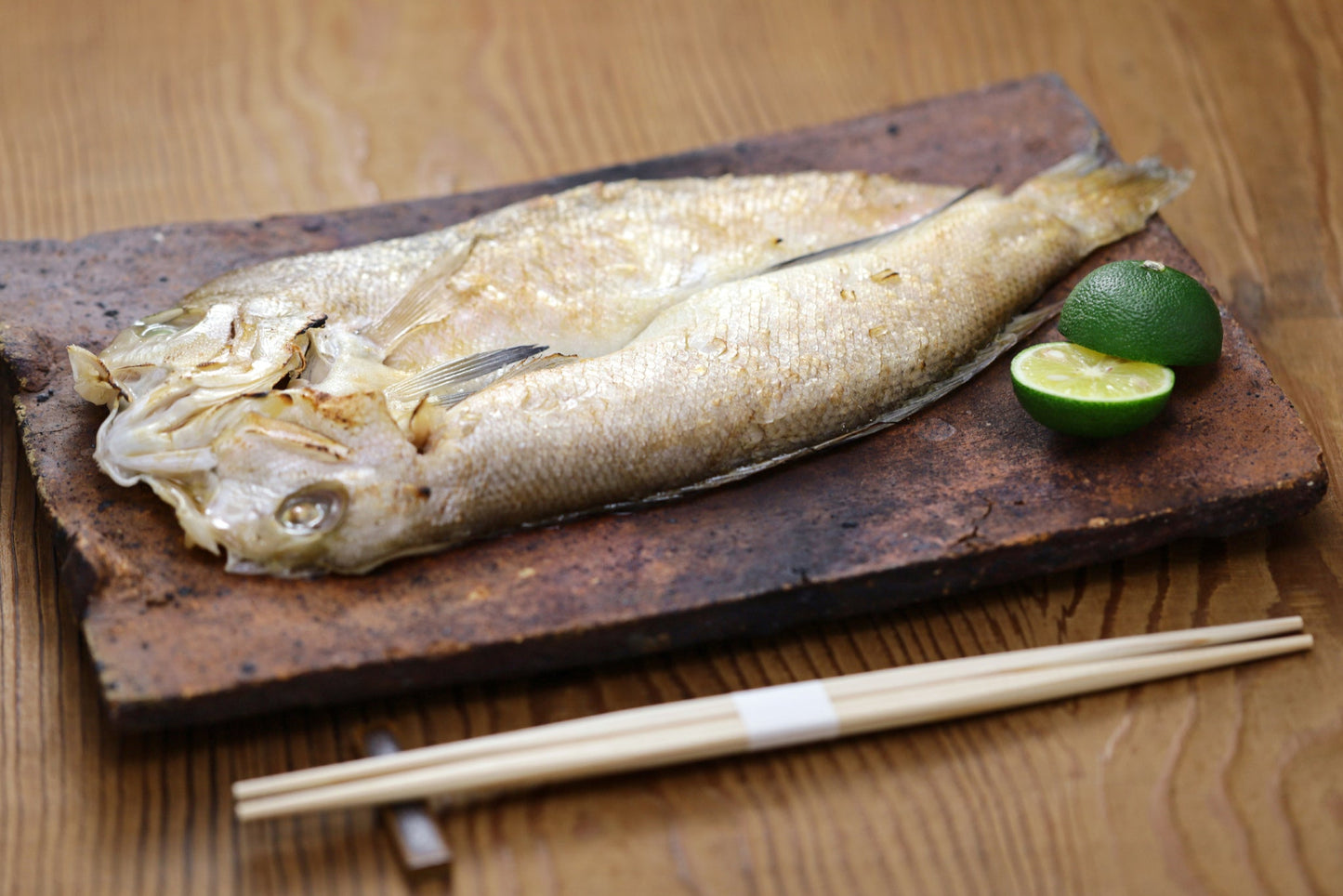
Amadai (甘鯛, tilefish) is a premium member of the sea bream family, prized for its tender, delicately watery flesh. It's most enjoyed from October to March, and the red and white varieties are especially sought after for their flavor, while the yellow is milder. This is red or white amadai, around 1.2 lb per piece.
Sourced mainly from the southern waters of Japan, amadai is a favorite of Kyoto's top kaiseki chefs. It's easy to recognize by its almost square head, large eyes, and big, delicate scales — scales that are part of its signature dish. The flesh is soft and melting, a standout for refined Japanese cooking.
Specifications
| Origin | Japan |
| Type | Amadai (甘鯛) — tilefish, red or white |
| Weight | approx. 1.2 lb per piece (varies) |
| Character | Tender, soft, delicate; melting texture |
| Season | October–March (peak) |
| State | Fresh, line-caught |
| Best for | Wakasa-yaki, steamed, sashimi, kelp-cured |
How to enjoy
The signature dish is wakasa-yaki (若狭焼き) — grilling the fish scales-on so the scales stand up and crisp while the flesh stays soft, a Kyoto technique unique to amadai. It's also steamed (over rice or with vegetables), simmered, or served in a clear soup as a wan-dane. Very fresh, it's excellent as sashimi or kelp-cured (kobujime), which firms the delicate flesh. Keep it cold and cook it fresh.
Pairing notes — salt, sudachi or yuzu, kombu, dashi broth, and a dry sake.
Share


Amadai Tilefish Japan 1.2lb
$254.00